
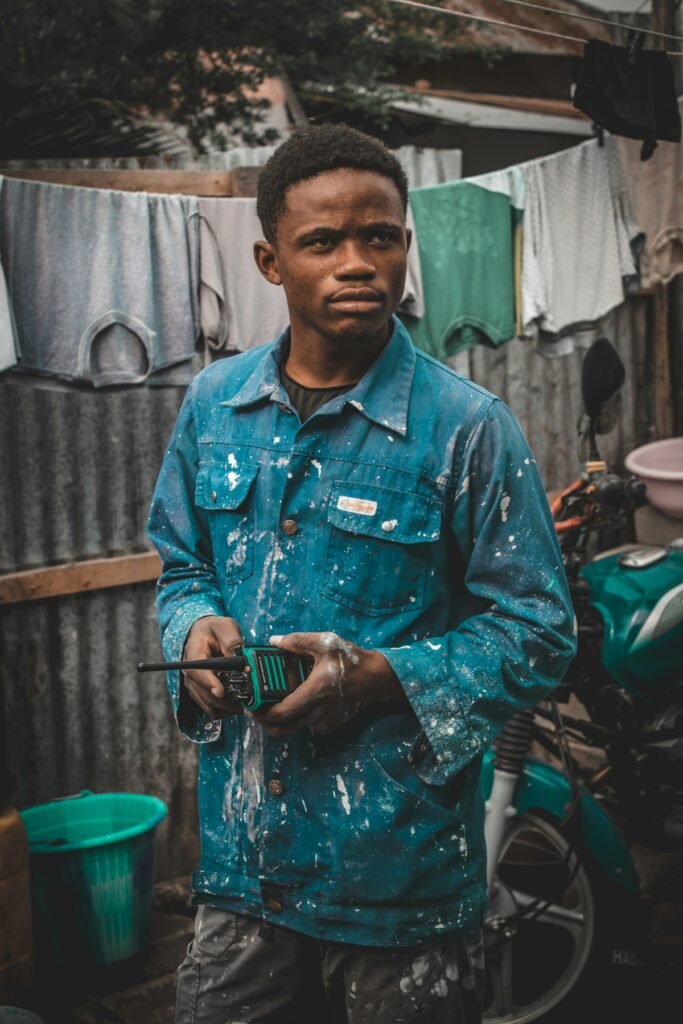
A marker can tell from one page whether you actually held a spanner at that placement or spent six months watching other people hold one. That judgement decides your SIWES grade, and the marker makes it before reaching Chapter Three.
This guide is for anybody writing a SIWES report for mechanical engineering, whatever the placement was. And if your honest worry is that they only sent you to buy parts and sweep the workshop, stay with this. Even that placement holds a report, and we’ll show you where it’s hiding.
The format in brief
Preliminary pages, then four or five chapters with the experience chapter carrying most of your marks, then references and appendices. The full skeleton lives in our complete SIWES report format guide, so this post takes that structure as given and deals with the mechanical side only. One rule before you type a word: your department’s format sheet wins. Not this post, not any PDF from the internet, your department’s own sheet. The Industrial Training Fund runs SIWES nationally, but the report format belongs to your school.
Where mechanical engineering students actually get placed
Manufacturing plants, bottling and food companies, automobile workshops, generator servicing firms, fabrication and welding yards, refrigeration and air conditioning companies, power stations, oil and gas servicing firms, and the maintenance unit of almost any large organisation. A few big firms run formal schemes, such as the Shell industrial training programme, but most students find their placement by knocking on gates, and a small workshop can give you a better report than a big name where you only observed.
The first place reports fall down is Chapter Two, where students name the company and stop. “I was attached to a manufacturing company in Ota” tells the marker almost nothing. “I was attached to the maintenance department of a plastics company in Ota, which runs six injection moulding machines on two shifts.” Now the chapter has started properly. Name the unit, name what it does, name the machines.
Turning workshop days into evidence of learning
Write out every task you did, however small, then match each one to a course you have taken. That matching is the whole job. It is what separates a strong SIWES report for mechanical engineering from a weak one, because the marker is hunting for exactly that link and most reports never make it.
Look at what your ordinary days actually were. Time on the lathe or milling machine is your workshop technology coursework running under your hands, so name the operations: facing, turning, drilling, and the tolerances you worked to. Arc or gas welding is manufacturing processes, so say which joints, which electrodes, which metals. Stripping and servicing a generator or vehicle engine is internal combustion engines on a real bench, so describe the fault, the parts replaced and the test run. Servicing pumps and compressors is fluid mechanics doing a day job. Greasing schedules, bearing replacement and shaft alignment are maintenance engineering. Reading and sketching part drawings is engineering drawing. Even the morning toolbox talk and the PPE rules are your industrial safety course, met in the one place anybody enforces it.
You’re not inflating anything. You’re describing what you did in the language of the course you’re studying, and that is what the report exists to test.
What students write, and what to write instead
What students write: “I assisted in the maintenance of machines.”
Do this instead: “I carried out scheduled maintenance on the injection moulding machines, checking hydraulic oil levels, cleaning filters and greasing the tie bars, and I recorded each check on the plant’s maintenance card.”
What students write: “I learned how to weld.”
Do this instead: “I practised shielded metal arc welding on mild steel plate, starting with butt joints in the flat position, and by the third month I was trusted with brackets that went onto customers’ work.”
What students write: “I was sent to buy spare parts.”
Do this instead: “I sourced replacement bearings and belts from the spare parts market, which taught me to match a bearing by its designation rather than by eye, and to tell genuine parts from fakes.”
Same tasks in each pair. One version earns marks. And one habit that spoils whole chapters: copying the logbook into the report week by week, so it reads like a diary. Group the placement into areas instead, machining, welding, maintenance, servicing, and write each area once. If the logbook itself is your struggle, our SIWES logbook guide shows what to write every day, even the slow days.
Numbers, drawings and one full process
Three things lift a SIWES report for mechanical engineering above the pile. Numbers: how many machines the plant runs, how many services you did in a month, what tolerance the lathe work held, and estimates are fine when you call them estimates. Drawings, because this is the one course where the appendix should never be empty: a dimensioned sketch of a part you machined, a joint detail or a workshop layout, each one referred to from the experience chapter. And one process followed from start to finish. Pick a job you saw whole: a generator arrives with a fault, somebody diagnoses it, sources the parts, does the repair, then test runs the set and releases it. Write that sequence as a numbered procedure or a simple flowchart. One clear process beats two pages of scattered activity, and it is the thing markers remember about a report.
What the department is marking
Most departments are marking a SIWES report for mechanical engineering on four things: how clearly you described the organisation and its plant, how well your tasks connect to your coursework, whether you understood one process from end to end, and what your observations and recommendations say about you at the close.
Recommendations are where marks leak. “The company should buy modern equipment” earns nothing, because anybody can write it without entering the gate. “The workshop’s only bench grinder serves eleven technicians, and jobs queued behind it every morning, so a second grinder on the fabrication side would clear that queue.” That earns marks, because it proves you watched the workshop and thought about it. Safety observations work the same way: write what you saw and what would close the gap, not just that safety was poor.
A sample chapter opening
Here is one that works. Chapter Three, Experience Gained. “My industrial attachment was undertaken in the maintenance and workshop unit of a beverage manufacturing company in Ogun State, which runs a bottling line, a boiler house and a fleet of delivery vehicles. During the attachment I worked in turn on the line maintenance crew, the machine shop and the generator bay, and this chapter describes the work carried out in each area and the skills gained.”
That paragraph names the unit, gives its size and functions, names the plant, and tells the reader how the chapter is organised. Everything else hangs off it. Notice one thing it never does: it never claims the student ran the boiler house. A marker spots borrowed authority in one second.
Before you submit
Read the draft once as yourself and once as the marker. Every task tied to a course topic, one process drawn, one set of numbers given, one drawing in the appendix, one recommendation that could only have come from your own eyes. Then confirm the preliminary pages, numbering and references match your department’s sheet. If your placement leaned towards the IT unit rather than the workshop, the computer science guide covers that ground, and laboratory attachments have their own guide too.
And if the logbook is full of grease and the report still refuses to come together, send us a message. Tell us where you served and what the department asked for, and we’ll tell you which parts of the placement to build the report around. Wetin your hand don touch, your report fit carry.
Where to go from here
Free. Start with our free tools for students.
Project, dissertation or assignment on your desk? We help with assessments, projects and dissertations, from first draft to submission. Twelve years, over a hundred students carried to completion. Talk to us or see what we do.