
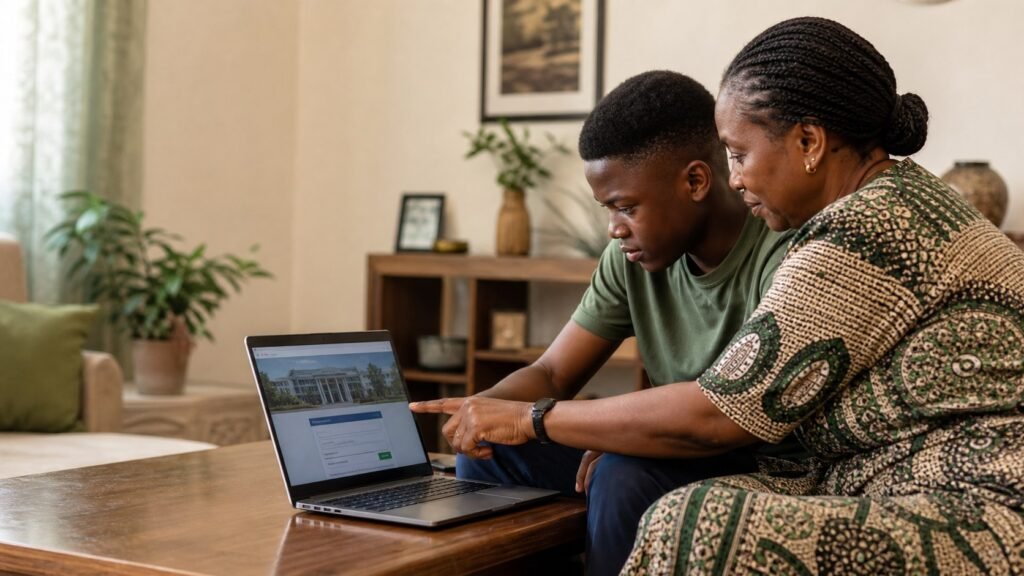
The message looks urgent. Registration closes tonight. The person has a university logo, a payment account and screenshots from other candidates who supposedly paid already.
Your child meets the cut-off mark, so nobody wants to delay. You transfer the money, receive a neat-looking receipt, and only later discover that the university never saw the application.
A Post UTME payment scam works because admission season is stressful. This guide shows how to check the real portal, approved payment route and receipt before you pay for any university screening in 2026.
Why this warning matters now
Universities are opening 2026/2027 Post UTME and Direct Entry registration at different times. Candidates are moving quickly, and scammers know that families fear missing a deadline.
The Federal University of Health Sciences, Otukpo placed an urgent warning on its official website. It says payments through unauthorised channels will be rejected and identifies its approved portals for new and returning students. The university also warns that it will not be responsible for money sent to unapproved accounts.
That warning is specific to FUHSO, but the lesson applies everywhere. The university, not a WhatsApp agent, decides the portal and payment method.
Start from the university website
Do not begin from a link inside a forwarded message. Type the university’s main web address or find it through JAMB’s institution information. From the official homepage, follow the current admission or Post UTME notice.
For example, the FUHSO homepage links candidates to its authorised application portal and carries the payment warning. The university’s Post UTME page provides its current screening route.
Look closely at spelling. A fake page may add one letter, use a strange ending or place the university name after another domain. The padlock icon only means the connection is encrypted. It does not prove the website belongs to the university.
Check the payment route before entering any details
A real notice should explain what you are paying for and how the payment is generated. Some institutions use Remita through their portal. Others use a payment gateway connected to the applicant account. The important point is that you arrive there from the official university website.
Do not transfer to a personal account because somebody says the portal is slow. Do not pay a separate “activation fee” to unlock the screening form. If the account name is a person when the notice says payment goes to the institution or an approved gateway, stop.
When in doubt, call the admissions or ICT contact published on the university website. Do not use the phone number from the same suspicious message you are trying to verify.
Warning signs of a Post UTME payment scam
Pressure is the first sign. A scammer wants payment before you can think. They may claim only a few slots remain, that the Vice-Chancellor approved a special list or that they can change a low score after payment.
Secrecy is another sign. They tell you not to contact the school, not to share the arrangement or not to mention their name at the admissions office. Real university registration does not need that kind of hiding.
Be careful when the form asks for your banking password, card PIN or one-time password. A normal application may take payment details through a secure gateway, but nobody should ask you to send those secrets through chat.
What a proper receipt should show
After payment, save the transaction reference and the receipt generated by the official portal. The receipt should connect to your application details, not only show that money entered an account.
Log out and sign in again. Check whether the applicant dashboard shows payment as successful and allows the next registration step. If the dashboard still says unpaid, do not send a second payment immediately. Use the payment support route on the official site.
Keep screenshots of the portal status, receipt and confirmation email. They help the university trace a genuine payment if the gateway updates slowly.
Protect your admission records
A fake agent may ask for your JAMB registration number, password, email login and phone number. That gives the person enough access to interfere with your admission information.
Enter login details only on the real portal. Do not allow a cafe attendant or agent to keep your password. Change the password after using a shared computer and never approve a password reset you did not request.
If your concern is the cut-off mark, read our guide on what to do after missing a Post UTME cut-off mark. Paying a stranger cannot create a legitimate score or admission.
If you already paid the wrong person
Contact your bank or payment provider immediately and report the transfer as fraud. Speed matters, although recovery is not guaranteed. Keep the account details, messages, receipt and phone number.
Report the account through the appropriate fraud channel and inform the university so it can warn other candidates. Change any password you shared. Check your JAMB and university profiles for changes.
Then return to the official registration route. Our Post UTME online exam checklist helps you prepare the device and mock-test side after registration. Our main JAMB CAPS guide explains what to monitor when admission processing begins.
Your final check before paying
Confirm the web address from the university homepage. Read the official notice. Check the account or gateway name. Make sure the amount matches the notice. Save the reference and verify that the payment appears inside your applicant dashboard.
Ask a parent, guardian or trusted person to look at the page with you if anything feels strange. Two minutes of checking can prevent a Post UTME payment scam from taking both your money and your application time.
Admission pressure is real, but a genuine university will still have a genuine route. Slow down, verify, then pay.